What is a tile roof?
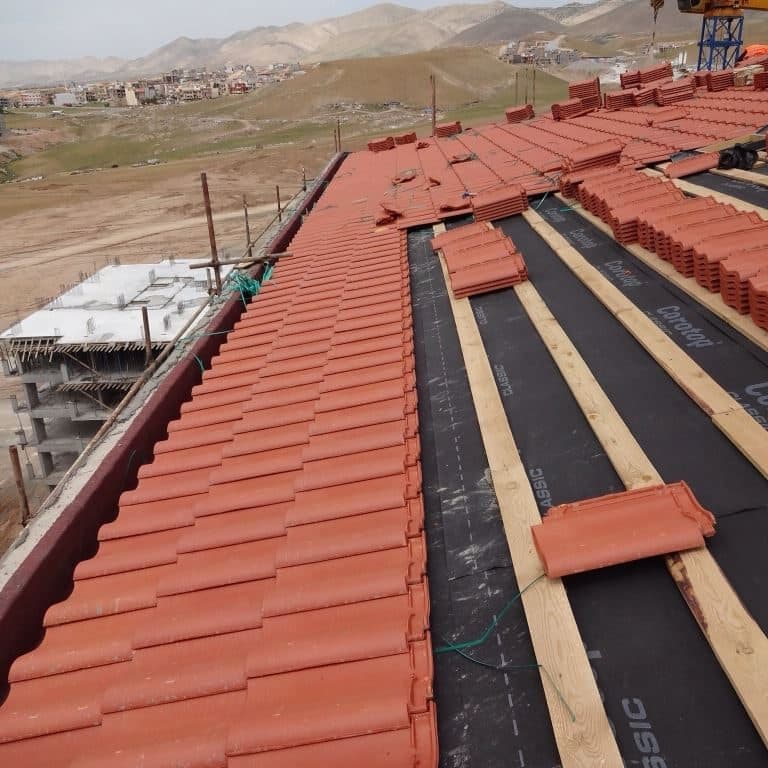
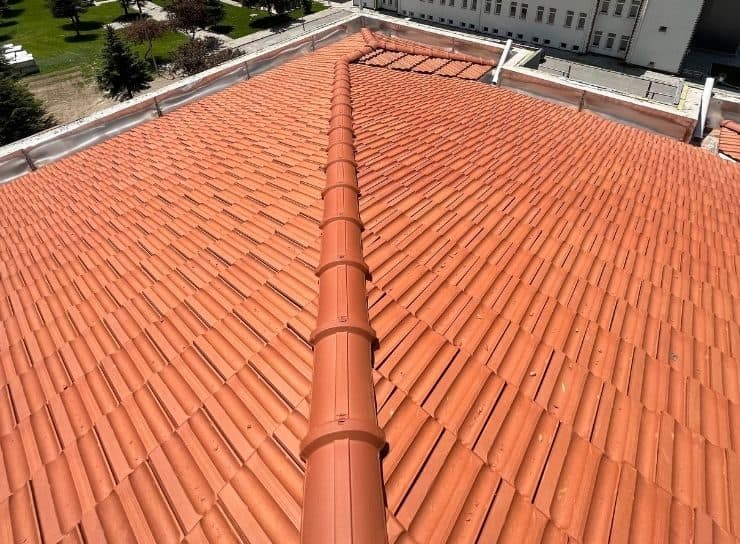
A tile roof is built by laying a waterproofing underlay, battens and overlapping tiles on a timber roof frame. The tiles interlock, and the overlaps channel rainwater to the eaves and the gutter.
The underlay beneath the tiles is the invisible but most critical layer. If a tile breaks or slips, this layer stops water from entering the building.
Clay tiles or concrete tiles?
Clay tiles are made from fired clay; their natural colour, breathability and long life make them the most popular choice. Concrete tiles are heavier but impact-resistant and come in more colours.
The right tile depends on the roof pitch, the load capacity of the structure and the look you want.
What is roof re-laying?
Re-laying means removing the tiles, checking the battens, timber and underlay beneath, renewing them where needed and then re-laying the sound tiles. It is more economical than a full renewal and ideal for roofs whose tiles are fine but whose substructure has worn out.
Installation steps
- 1Inspection: the tiles, timber and underlay are assessed
- 2Existing tiles are removed and sound ones are set aside
- 3Rotten timber and battens are replaced
- 4The waterproofing underlay is laid with overlaps
- 5Battens are fixed and the tiles are laid neatly
- 6Ridge, chimney and valley joints are finished
Benefits
- Traditional, attractive appearance
- Breathable structure that reduces condensation
- Good thermal and acoustic insulation
- Easy maintenance — tiles can be replaced individually
- Years of trouble-free use on a proper substructure
When do you need it?
- Tiles are broken, slipped or displaced
- Damp or water stains appear on the ceiling or in the attic
- The roof has not been re-laid or inspected for many years
- You are choosing a roof covering for a new building
Frequently asked questions
How often should a tile roof be re-laid?
There is no fixed interval; it depends on the materials and the climate. We recommend an inspection once a year and replacing broken tiles promptly. Re-laying becomes necessary when the timber rots or the underlay wears out.
Can a single broken tile cause problems?
Over time, yes. Water entering through a broken tile reaches the underlay and timber, causing rot and ceiling stains. A small replacement prevents a much bigger repair bill later.
Can old tiles be reused?
Sound tiles of the same model can be reused when re-laying, and matching tiles are sourced for any shortfall. This significantly lowers the cost.